
If I had to choose only 4 exercises
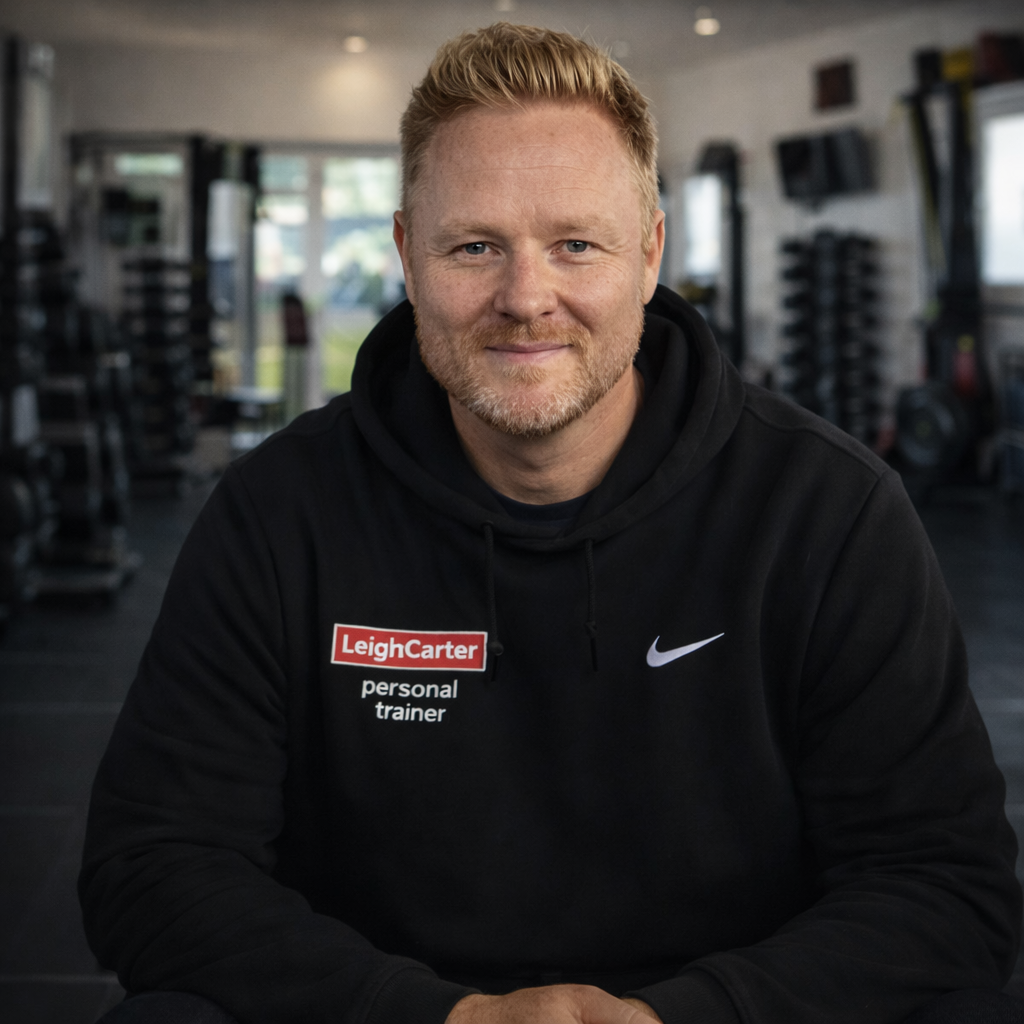
By Leigh Carter
Personal trainer at anybodygym
For home training with some basic equipment, my four choices are pull-ups, push-ups, dips and lunges. They give you a short list of exercises you can learn, repeat and progress. The important part is choosing a version you can perform well enough to make it useful.
You’ll need a secure pull-up bar and suitable dip bars for the full versions. Push-ups and bodyweight lunges need much less equipment. Start with what suits your current ability and the space you actually have.
Why I would keep a home workout simple
You can spend a lot of time looking for the perfect workout. At some point, you need a small number of things you understand well enough to practise consistently.
That is the point of this article. If you have a bit of space and some basic equipment, these are four exercises I would choose. As you get stronger, there is room to change the difficulty without constantly starting again with a completely different routine.
I started learning about training with very little knowledge myself. I even built equipment in my dad’s garage so I could train at home. I understand the appeal of having something practical you can get on with.
My coaching now is built around the same question: what can you do well, repeat consistently and make progress with? The exercise has to fit the person.
1. Pull-ups
A pull-up gives you an upper-body pulling exercise, working your back and arms. But a full bodyweight pull-up does not have to be your starting point.
Change the angle and the assistance
My approach is to make the pulling movement manageable first. With a suitable low bar, you can start with a bodyweight row: your feet stay on the floor while you pull your chest towards the bar. This is a different movement from an overhead pull-up, but it gives you an adjustable way to begin pulling.
A higher bar and a more upright body generally make the row easier. A lower bar and a more horizontal body increase the challenge. Bending your knees and bringing your feet closer can also give you more assistance from your legs. Adjust the position until you can perform controlled repetitions rather than struggling through a movement you cannot yet manage.
Use a purpose-built bar or station installed and rated for that exact exercise. Only reposition a doorway bar if its manufacturer explicitly permits that position and direction of loading. Check the mounting, your grip and the clear space before starting.
As you get stronger, gradually reduce the assistance or make the row more demanding. You can then work towards an assisted overhead pull-up and eventually your full bodyweight, if that is an appropriate goal for you. There is no need to rush through the stages.
2. Push-ups
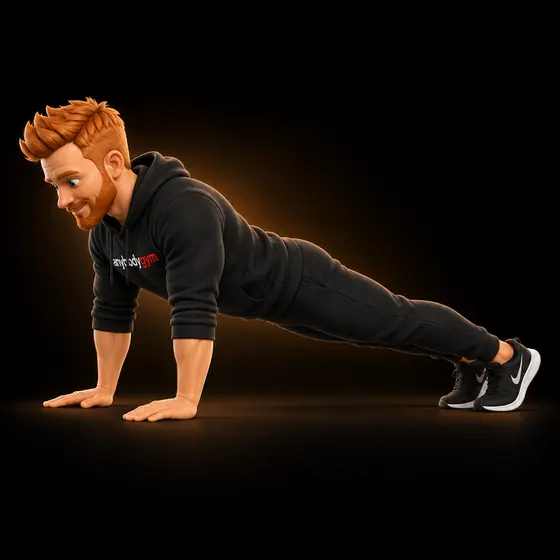
Push-ups train the chest, shoulders and triceps. Again, the useful question is how to change the leverage so the exercise fits your current strength.
Raise your hands or shorten the lever
If a full floor push-up is too difficult, raise your hands onto a fixed, stable surface designed to support you. The more upright your body, the easier the pressing movement generally becomes. As you get stronger, lower the hand position gradually.
Another option is to push up from your knees. That shortens the distance between your hands and the point supporting your lower body, so you are moving a smaller proportion of your bodyweight. Keep your body aligned from your shoulders to your knees and lower under control.
Choose a version that lets you do useful repetitions with a comfortable range of movement. Build those repetitions, then make the angle or leverage more demanding. Keep a record so you can see what has improved.
3. Dips
Dips are another pressing exercise for the chest, shoulders and triceps. How much help you get from your feet makes a substantial difference to the difficulty.
Use foot assistance before full bodyweight
On suitable equipment, keeping your feet supported can let your legs assist the pressing movement. In a supported seated dip variation, bent knees and feet closer to you generally allow more assistance; moving the feet farther away and straightening the legs can make it harder. Only use a range that feels comfortable at your shoulders.
On purpose-built parallel dip bars at a suitable height, you can also keep your feet on the floor to help you rise. Reduce that help gradually as you become stronger. Full bodyweight dips are a later option when you can support yourself and control the movement without assistance.
The equipment matters here. Ordinary household chairs can slide or tip, especially when you load them between two supports. Use a stable, purpose-built station rated for the exercise rather than improvising with loose furniture.
Avoid dropping quickly or forcing extra depth. If dips cause shoulder discomfort or you cannot control them, choose a pressing movement you can manage, such as an incline push-up. The exercise has to suit you.
4. Lunges
Lunges train the legs and hips while asking you to control your position. Start with a version you can perform steadily on both sides.
Build repetitions, then add resistance
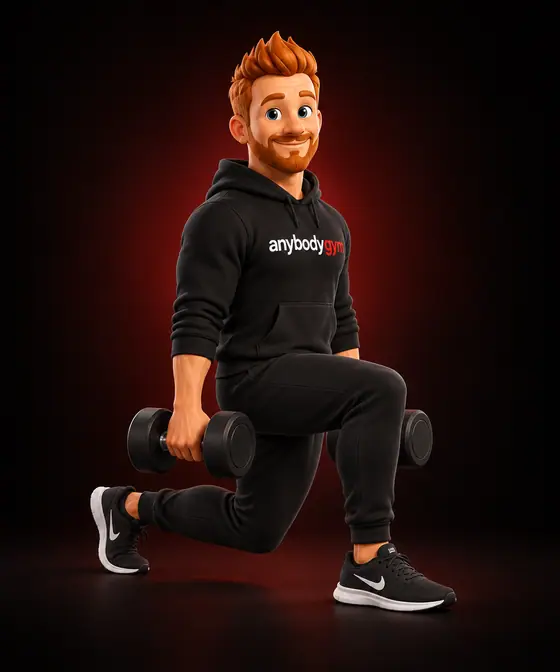
If you are only managing a few controlled repetitions, building that number can be your next step. A supported split squat, with a fixed support for balance, can help you establish the movement before progressing to stepping lunges.
Once bodyweight lunges become comfortable, a light pair of dumbbells gives you a straightforward way to increase the resistance. Add weight gradually while keeping the movement controlled. There is no benefit in adding a load that makes you lose the position you have worked to establish.
A pistol squat is another, more advanced single-leg option. It is a separate exercise with greater balance, mobility and strength demands, rather than a compulsory next stage of a lunge. You can continue making progress with lunges and dumbbells without needing to move to it.
How to turn four exercises into useful training
Having four exercise names is a starting point. Your plan also needs to account for how difficult each exercise is for you, how much you do and how you recover.
Begin with an easy warm-up and practise the movements at a manageable level. Choose variations that let you perform controlled repetitions without having to force the movement. Rest enough between sets to repeat the exercise well.
For someone beginning strength training, two sessions in the week with recovery between them can be a practical starting structure. The number of sets and repetitions should reflect the version you are doing and your current capacity. A full pull-up and a wall push-up can be very different challenges.
Record the exercise, the variation and what you managed. Once the same work becomes clearly easier, change one thing at a time: a little less assistance, another controlled repetition or an appropriate increase in resistance.
If you are new to exercise, returning after a long break or dealing with a health condition, get appropriate advice before attempting demanding versions. Stop an exercise that causes pain and seek help to find a suitable alternative.
Where the rest of your fitness fits
These are my choices for a short home-training menu. A fuller programme should consider all the major muscle groups and movement patterns. Push-ups and dips overlap, and your wider routine may benefit from additional pulling, hip-hinge work or other exercises suited to your goals.
Cardiovascular activity belongs in the week as well. Walking, cycling and other activity you enjoy can sit alongside strength training. The NHS adult activity guidelines include both strengthening and aerobic activity.
If weight loss is part of your goal, we also need to look at food intake, normal daily activity and what you can sustain. Four exercises can contribute to your training, while the wider plan determines how it fits your weight-management goals.
For more options as your needs change, see my bodyweight exercise library. If getting started is the harder part, my article on exercise motivation explains how I think about making progress visible.
Questions about training at home
Can I do these four exercises with no equipment?
The full pull-up and dip need suitable equipment. Push-ups and bodyweight lunges can be done with very little kit, and assisted versions may need a stable support. Plan around the equipment you actually have.
Do I need to do them every day?
Your strength sessions need room for recovery. Begin with a manageable schedule and adjust it according to how you recover and progress. Daily movement can include easier activities such as walking.
Can you help me train at home?
Yes. Through online coaching, we can choose suitable exercises, organise your training and review how you are progressing with your own equipment.
Exercise guidance
The ACE exercise library provides movement guides with equipment and difficulty information. For the wider activity picture, see the NHS physical activity guidelines for adults.
Make your home equipment work for you
I’m Leigh Carter. If you like the idea of a simple routine but are unsure where to start, we can look at your equipment, your experience and what you want to improve.
My online personal training and coaching gives you a personalised programme, exercise guidance, progress reviews and a booked coaching call each week. You complete your workouts independently and share your results so I can adapt the plan with you. Live online training is also available through my premium coaching option.
If you are local, you can train with me one-to-one at my private anybodygym studio in Peterborough. You have the gym to yourself for your session.
Start with a free consultation so we can discuss what would be useful for you.