
How Does Online Personal Training Work Beyond the Training Plan?
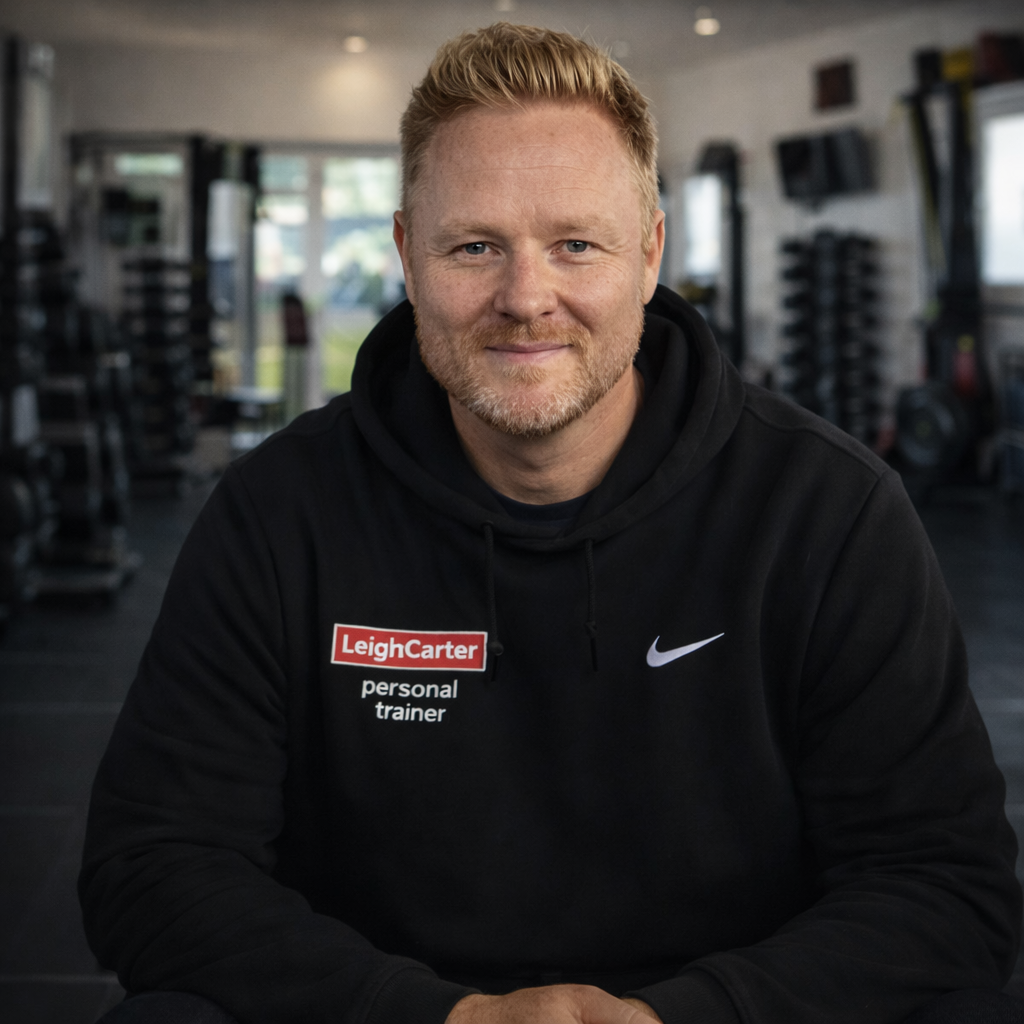
Private personal training in Peterborough and online coaching
Online personal training works through an individual programme, clear instruction and an ongoing exchange of feedback. Some workouts are completed independently; others are coached live over video. In either case, the important question is how the coach understands your starting point, helps when something is difficult and adapts the plan as you progress.
What happens after somebody sends you a training plan?
That is the useful question behind online personal training. A list of exercises can tell you what to attempt. It cannot, by itself, tell a coach whether the exercise made sense to you, whether you could fit it into your week or why you have stopped doing it.
I have spent more than 28 years coaching people. In my Peterborough gym, some of the most useful information arrives in ordinary conversation. Someone mentions a difficult week, an exercise they avoid or a food diary they have quietly stopped completing. That changes what I do next.
Online coaching needs a way for those conversations and observations to happen too. The technology connects us; the coaching is what we do with the information.
How does online personal training work in practice?
Arrangements vary between trainers, but it helps to separate three parts of the process: establishing a starting point, doing the agreed training and reviewing what actually happened.
A programme should reflect the person using it: their experience, goals, equipment and realistic routine. After the workouts, results and feedback give the coach something to review. A conversation can then explain what the numbers alone have missed.
In my service, this starts with a detailed consultation and an initial one-to-one video interview. I want to understand the person before deciding what their training should look like. That preparation is part of both of my online packages. It is not reserved for somebody buying the longest appointments.
Can a coach help if they are not watching every workout?
Yes. Useful coaching can happen around a workout as well as during it. A client can explain where they struggled, ask about a movement and discuss what they managed. The coach can clarify an instruction, demonstrate something or decide that the exercise needs changing.
That relies on communication. If I receive a completed workout record but no indication that something felt awkward, I may be missing the most important part. I want people to tell me when the plan does not feel manageable, rather than assume they have failed it.
My monthly coaching includes a booked twenty-minute one-to-one video call each week, alongside programme reviews, demonstration videos, nutrition guidance and WhatsApp text support. Workouts are completed independently, but there is still live personal contact and practical guidance. It is a different amount of time together from a full coached workout, not an absence of coaching.
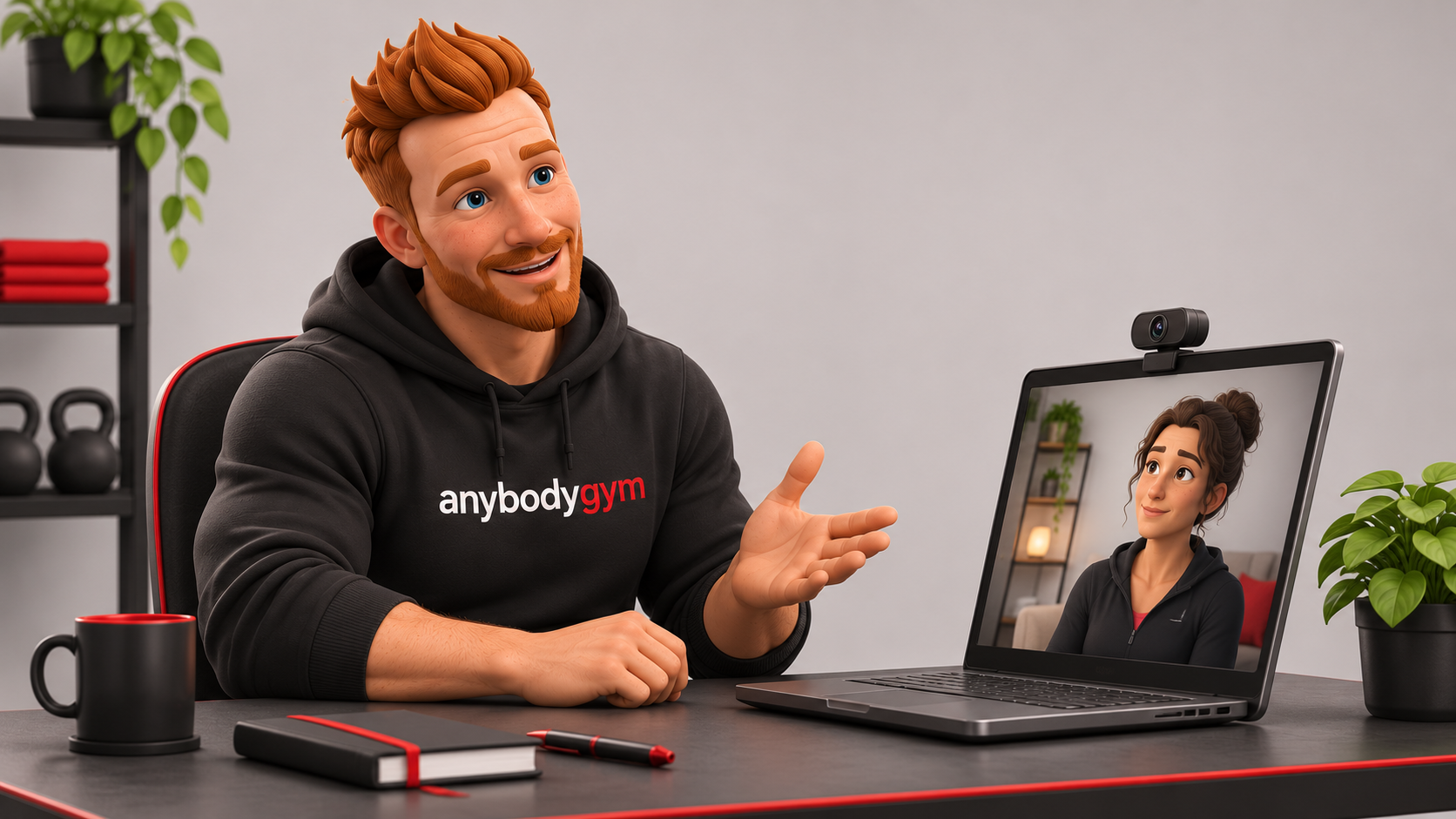
What changes when the trainer watches you exercise live?
A live training appointment lets the coach respond while you are practising. I can watch a movement, explain what I am looking for and adjust the instruction or exercise there and then. There is less distance between the question and trying the answer.
Longer appointments also create more room to talk. Someone’s description of their week may explain why a sensible-looking plan has become difficult. Listening and helping them work through that is part of my job; simply telling them to try harder often misses the problem.
That is why my ten-week package adds ten full one-hour live training sessions to the support included in monthly coaching. Both include weekly twenty-minute calls. The additional hours provide time to coach workouts and work through movements together. They are arranged flexibly within the ten weeks, rather than having to fall exactly once each week.
A food diary shows why the conversation matters
Sometimes I think someone is ready for a little more detail with their diet. Then, as we talk, I realise that the food diary I suggested is making the process feel overwhelming.
I could keep repeating the instruction. But if the person is not ready for that approach, repeating it more firmly is unlikely to make it useful. Instead, I will suggest another manageable way forward and agree it with them. We can build towards more detail when they feel ready.
That decision comes from knowing the person and listening to their response. It is not something a generic programme can do on its own. The same principle applies online: the feedback needs to reach me, and I need to use it to make the next step appropriate.
What needs to be in place for useful video coaching?
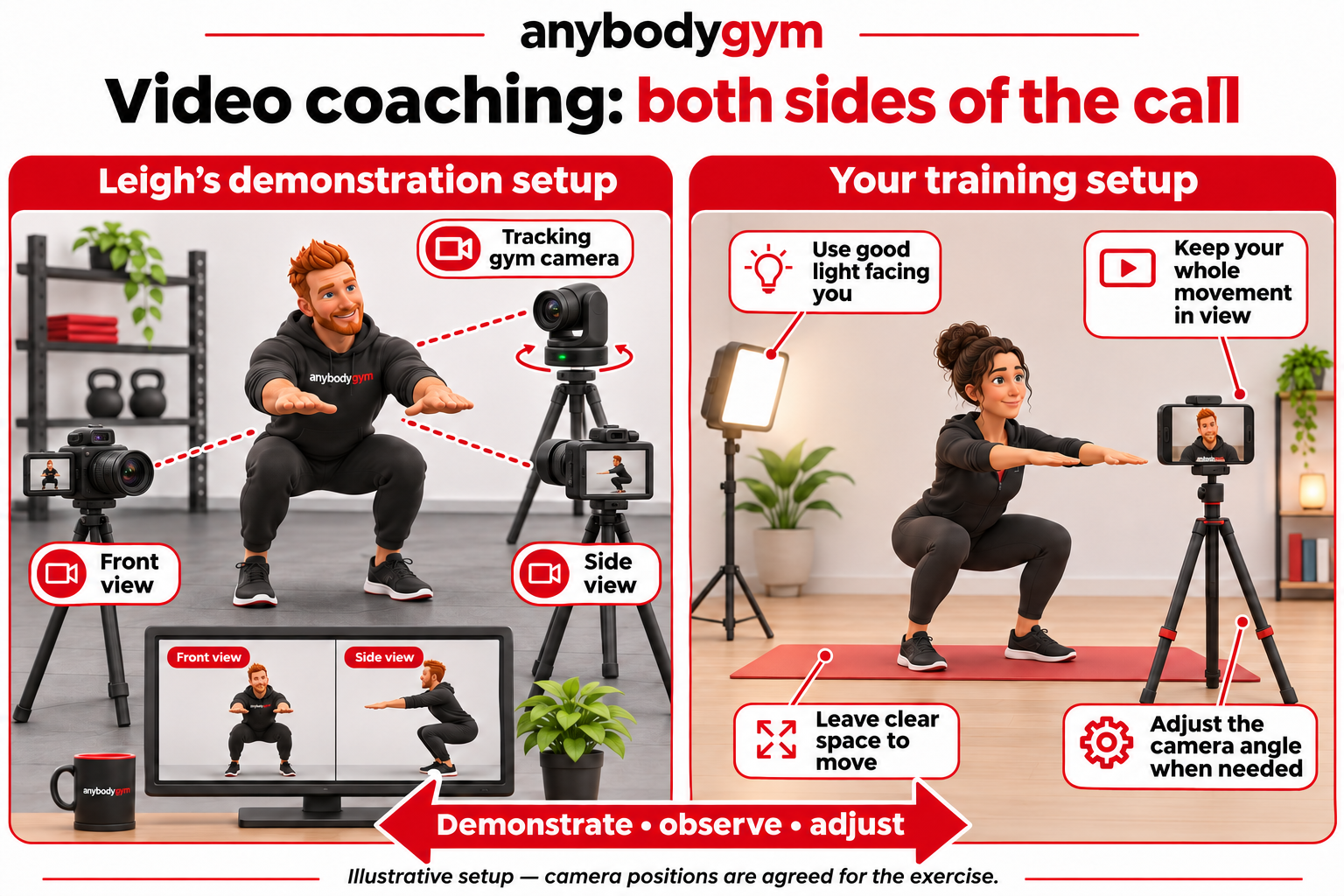
For exercise observation, the view needs to show what we are discussing. Suitable lighting, camera positions, clear space and appropriate equipment matter. Putting a laptop in the corner and hoping for the best is not a setup process.
We agree the practical arrangements before live training. Demonstration videos can also help someone revisit an explanation between appointments. In my own gym I can demonstrate from front and side views, with a dedicated tracking camera following me as I move. This is a proper camera, not a mobile phone. Different views help me show the detail I want to explain. Your camera position is agreed so I can see the movement clearly, and we adjust it when needed.
Video has limits. I cannot physically spot a weight through a screen, and a camera does not provide every observation available in person. If somebody needs physical assistance or an in-person assessment, we need to account for that when deciding how to train.
How much live time is useful?
There is no single answer based only on whether somebody is a beginner. Confidence, the movements being learned, the support they prefer, available time and budget all affect the decision.
Someone may be happy to practise an agreed programme independently and use shorter calls for questions and progress reviews. Somebody else may value a full hour with their coach while they train. Being capable of training alone and wanting to train alone are different things.
The useful distinction is what happens when a difficulty arises. Is there a way to raise it, enough time to understand it and an appropriate response? More contact is valuable when it serves a purpose. A shorter appointment can still provide meaningful help.
The aim is a plan that responds to a real person
Online personal training is a process of instruction, practice, feedback and adjustment. The plan matters, but so does understanding why it is or is not working in someone’s actual life.
That is the part of my gym coaching I want to carry into online work. I want clients to understand what they are doing, feel able to tell me when something is difficult and build confidence through progress.
If that approach sounds useful, my online personal training page explains both packages, including the consultation, weekly calls and additional live training sessions. You can also see the current prices. We can discuss the level of contact that fits how you want to train.
Find the support that fits your training
I offer personalised online coaching throughout the UK and private one-to-one training in Peterborough. We start by understanding your goals, current situation and the support you want, then agree a practical way forward.